Wide-complex arrhythmia from the ventricle — VF and pulseless VT are cardiac arrest rhythms requiring immediate defibrillation.
Also known as: VT, VF, ventricular tachycardia, ventricular fibrillation, VTach, VFib, wide complex tachycardia
Overview
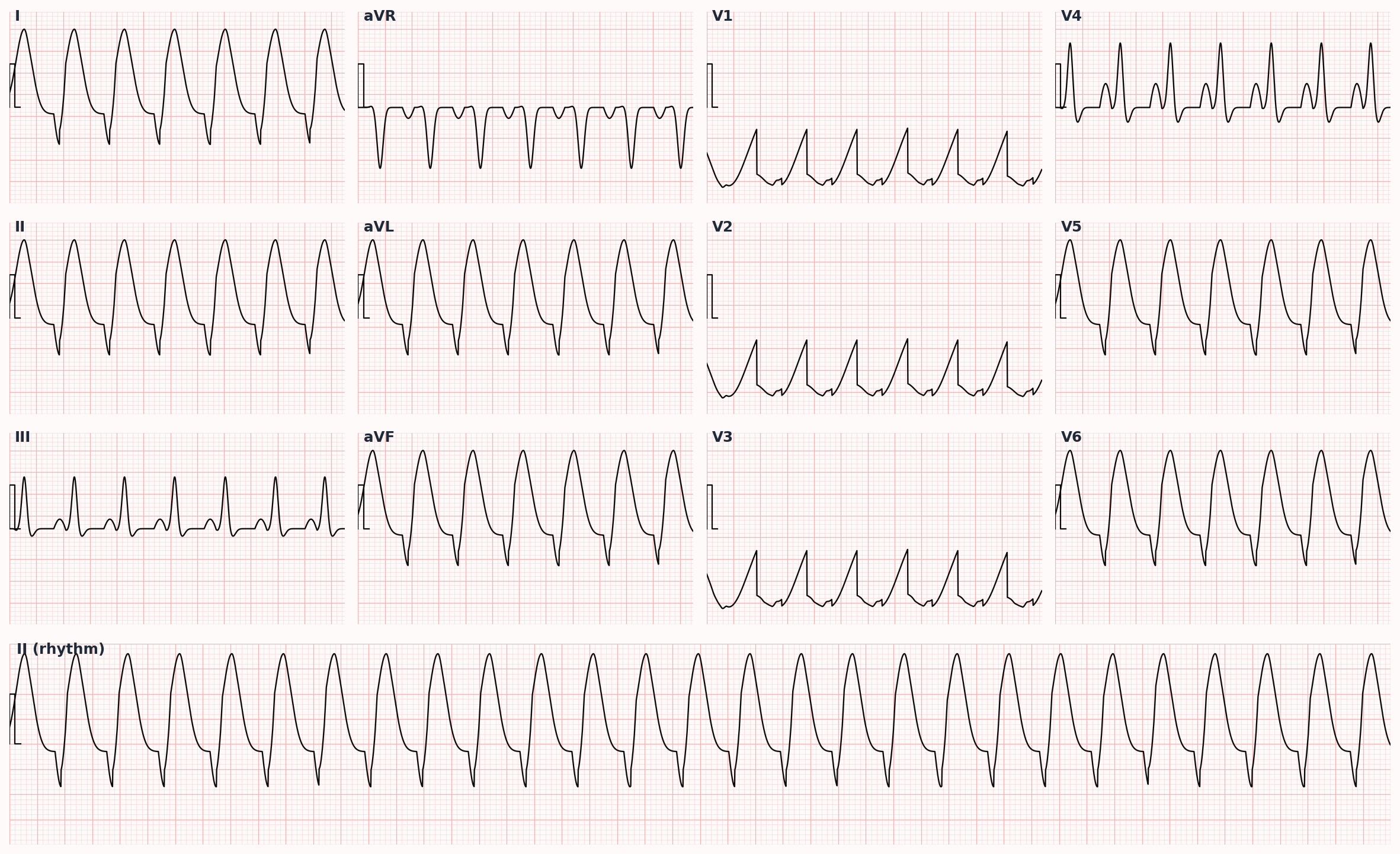
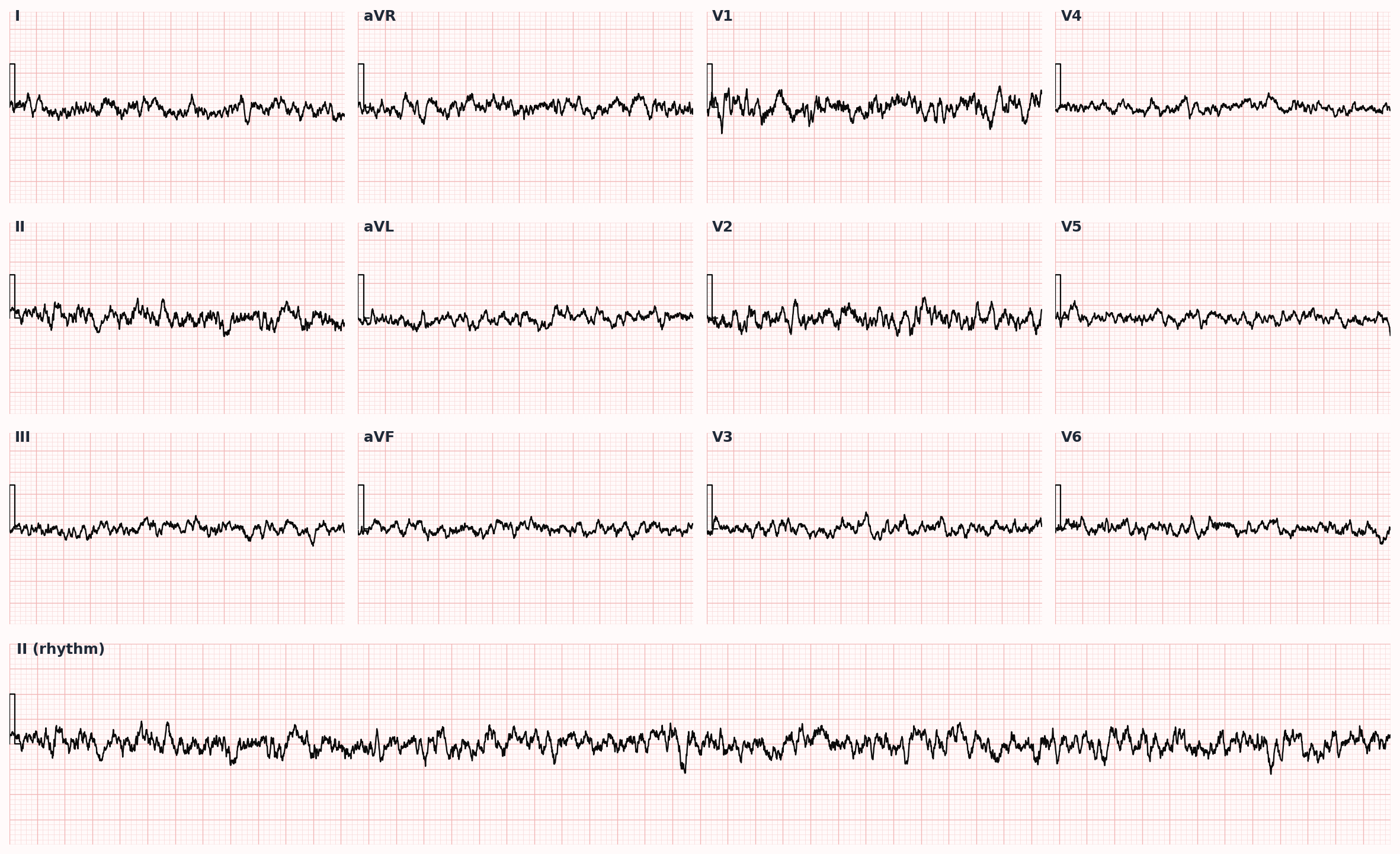
Ventricular tachycardia is ≥3 consecutive ventricular beats at rate >100 bpm; sustained if >30 s or causes hemodynamic compromise. Ventricular fibrillation is disorganized rapid ventricular electrical activity producing no effective cardiac output.
Epidemiology
Ventricular arrhythmia accounts for the majority of sudden cardiac deaths (~300,000/year US). Most cases occur in patients with structural heart disease, particularly post-MI ischemic cardiomyopathy.
Try two board-style Ventricular Tachycardia and Ventricular Fibrillation questions
Real questions from the FirstPassPA bank, with the full explanation. Pick an answer — no signup, no email.
Question 1CardiovascularMedium
A 62-year-old man with dilated cardiomyopathy and an ejection fraction of 25 percent presents after receiving three appropriate implantable cardioverter-defibrillator (ICD) shocks over the past 12 hours, each for sustained monomorphic ventricular tachycardia. He is hemodynamically stable between episodes. Potassium is 4.2 mEq/L and magnesium is 2.1 mg/dL, troponin is not elevated, and device interrogation confirms appropriate detections with no lead malfunction. His beta-blocker has been uptitrated. Which of the following is the most appropriate next step in management?
AIntravenous amiodarone with catheter ablation referral
BIntravenous procainamide with cardioversion
COral sotalol with outpatient follow-up
DReprogramming the ICD to a higher detection rate
Reveal answer & full explanation
Correct answer: A — Intravenous amiodarone with catheter ablation referral
AIntravenous amiodarone with catheter ablation referral✓
BIntravenous procainamide with cardioversion
COral sotalol with outpatient follow-up
DReprogramming the ICD to a higher detection rate
Why intravenous amiodarone with catheter ablation referral is correct
This patient has ventricular tachycardia (VT) storm, defined as three or more separate episodes of sustained VT or appropriate ICD shocks within 24 hours, here in the setting of dilated cardiomyopathy with severely reduced ejection fraction.
Management combines acute antiarrhythmic suppression with definitive substrate-directed therapy: intravenous amiodarone (with continued beta-blockade) acutely suppresses the arrhythmia, and catheter ablation targets the reentrant scar circuit.
Amiodarone is the preferred acute antiarrhythmic in structural heart disease; ablation reduces recurrent VT and ICD shocks, as demonstrated in the VANISH and SMASH-VT trials.
Reversible triggers such as electrolyte derangement and ischemia have already been excluded here.
Why the others are wrong
B) Intravenous procainamide with cardioversion — Although procainamide can terminate stable VT, this patient is hemodynamically stable between episodes and already protected by an ICD, so the priority is suppression plus ablation rather than repeated cardioversion; procainamide is also a negative inotrope poorly tolerated in an ejection fraction of 25 percent.
C) Oral sotalol with outpatient follow-up — Sotalol is inadequate for active VT storm, would delay definitive therapy, and carries proarrhythmic and negative inotropic risk in severely reduced systolic function.
D) Reprogramming the ICD to a higher detection rate — While antitachycardia pacing and detection programming can reduce unnecessary shocks, programming changes alone do not treat the underlying arrhythmogenic substrate and would leave the patient at continued risk during storm.
Question 2CardiovascularEasy
A 65-year-old male with prior anterior myocardial infarction (MI) presents with palpitations and lightheadedness. ECG shows a regular wide-complex tachycardia at 180 bpm with atrioventricular (AV) dissociation, fusion beats, and QRS duration of 160 ms. Which of the following is the most likely diagnosis?
CAtrial flutter with rapid ventricular response (RVR)
DVentricular tachycardia✓
Why Ventricular tachycardia is correct
AV dissociation, fusion/capture beats, and QRS >140 ms in a patient with prior structural heart disease are essentially diagnostic of ventricular tachycardia (VT) by Brugada criteria.
Prior anterior MI provides the scar substrate for monomorphic re-entrant VT, the most common mechanism in this setting.
Default to VT in any patient with prior myocardial infarction (MI) or known coronary artery disease (CAD) presenting with a wide-complex tachycardia until proven otherwise.
The regular rate of 180 bpm with a QRS of 160 ms fits a sustained monomorphic VT.
Why the others are wrong
Supraventricular tachycardia — a supraventricular rhythm cannot produce AV dissociation or fusion beats; invoking it here is the classic anchoring trap that misclassifies wide-complex VT as "SVT with aberrancy."
Antidromic atrioventricular reentrant tachycardia (AVRT) — antidromic AVRT is a supraventricular mechanism; the combination of AV dissociation, structural heart disease, and Brugada criteria makes this a wrong-mechanism confusion with VT.
Atrial flutter with rapid ventricular response (RVR) — atrial flutter does not produce AV dissociation or fusion beats, so this is a right-concept-wrong-setting distractor.
Additional high-yield points
Stable VT: treat with amiodarone or procainamide.
Unstable VT: synchronized cardioversion.
AV nodal blockers (verapamil) can be lethal if the wide-complex tachycardia is actually VT.
🔒 Free preview limit reached
Keep reading — start your free trial
You've read your 2 free diagnosis previews. Create your free account to unlock the full Ventricular Tachycardia and Ventricular Fibrillation outline — plus all 514 diagnoses, 6,500+ board-style questions, flashcards, and an AI tutor. Your 7-day free trial includes everything, and there's no credit card required.
Most sustained VT in adults is scar-related macroreentry around fibrotic post-infarct tissue. Triggered activity (early or delayed afterdepolarizations) and abnormal automaticity also produce VT, especially in long QT syndromes (torsades de pointes) and in catecholamine-driven states. VF is multiple wandering wavefronts producing chaotic activation and no coordinated contraction.
Clinical presentation
Symptoms
Palpitations, lightheadedness, syncope
Chest pain, dyspnea
Cardiac arrest in VF or pulseless VT
Some patients tolerate sustained monomorphic VT for minutes-hours with mild symptoms
Absent pulse and unresponsiveness in VF / pulseless VT
Differential diagnosis
Supraventricular tachycardia with aberrancy — Wide QRS from rate-related or pre-existing bundle branch block; Brugada and Vereckei algorithms favor SVT; respond to adenosine
Antidromic AVRT (WPW) — Wide-complex tachycardia in pre-excited patient; treat with procainamide; AVOID AV nodal blockers
Pre-excited atrial fibrillation — Irregularly irregular wide complex tachycardia in WPW; can degenerate to VF; treat with procainamide or DC cardioversion
Hyperkalemia — Sine wave on ECG, peaked T waves, history of CKD, treat with calcium gluconate, insulin/D50, kayexalate
Artifact — Patient awake and well-appearing, baseline ECG between artifact, regular underlying rhythm visible
Diagnostic workup
Diagnostic criteria
VT criteria favoring ventricular origin: AV dissociation, capture/fusion beats, QRS >140 ms RBBB or >160 ms LBBB morphology, concordance in precordial leads, extreme axis deviation. When in doubt about wide-complex tachycardia, treat as VT.
Labs
BMP, magnesium, calcium
Troponin (ischemia), TSH
Drug screen if stimulant use suspected
Digoxin level if applicable
Imaging
12-lead ECG during tachycardia and after conversion (look for old MI, QT, Brugada pattern, epsilon waves)
STABLE VT with pulse: IV antiarrhythmic — amiodarone 150 mg IV over 10 min, procainamide 20-50 mg/min (preferred for monomorphic VT in many guidelines), or lidocaine 1-1.5 mg/kg IV
Torsades de pointes: magnesium sulfate 2 g IV, withdraw QT-prolonging drugs, correct K+ and Mg2+, overdrive pacing or isoproterenol
Identify and treat reversible cause: ischemia (revascularize), electrolytes, drugs
Second-line / adjunct
ICD — secondary prevention for survivors of cardiac arrest, sustained VT with structural disease, or unexplained syncope with inducible VT
Primary prevention ICD: LVEF ≤35% on optimal GDMT (≥3 months) with NYHA II-III; LVEF ≤30% post-MI (after 40 days); selected channelopathies and high-risk HCM
Cardiomyopathy from incessant VT (tachycardia-mediated)
ICD complications: lead displacement, infection, inappropriate shocks
PANCE pearls
When in doubt about a wide-complex tachycardia, treat as VT until proven otherwise.
AV dissociation, capture beats, and fusion beats are highly specific for VT.
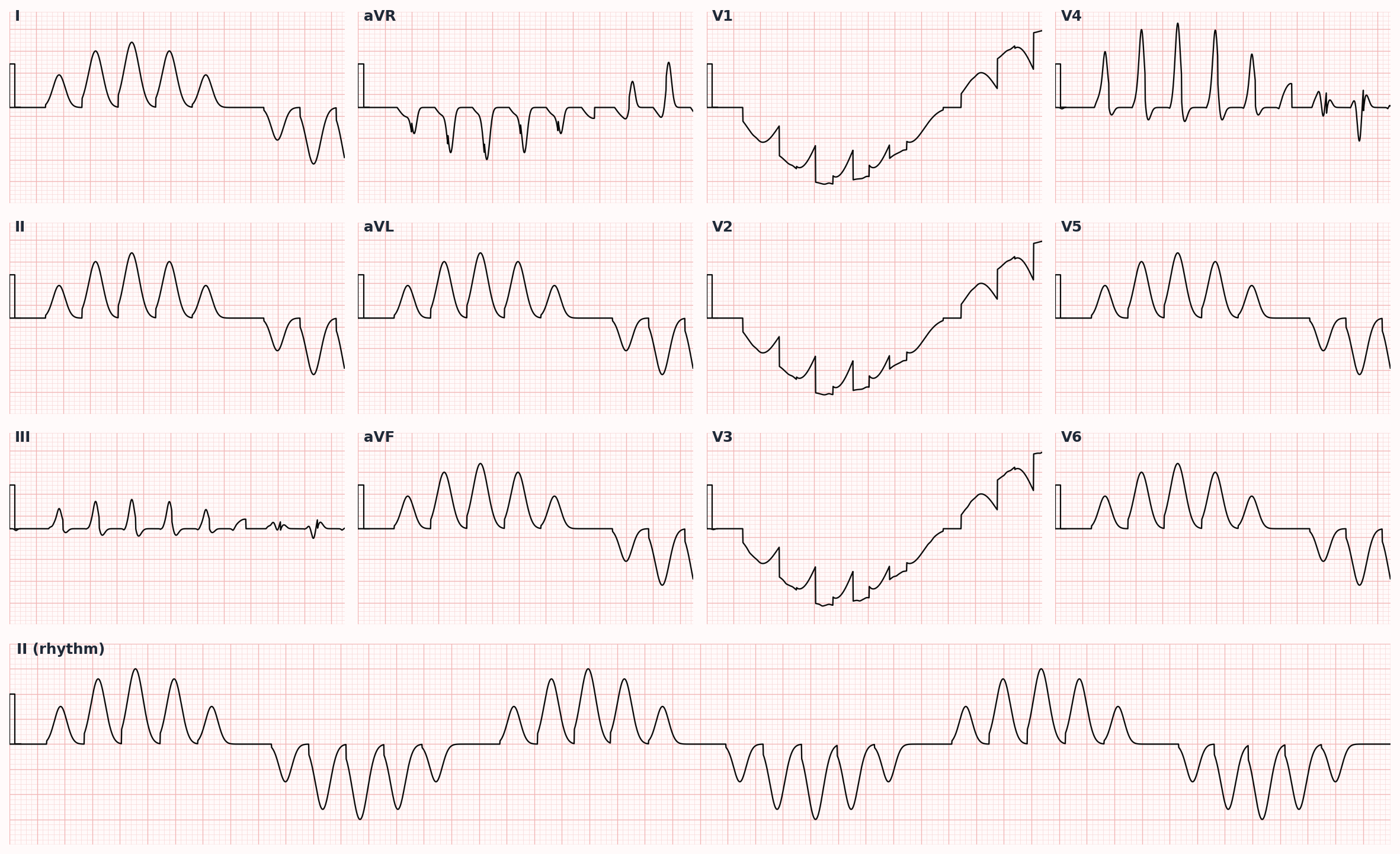
Torsades de pointes = polymorphic VT with twisting QRS axis in setting of long QT — give magnesium first.
Brugada syndrome: pseudo-RBBB with coved ST elevation in V1-V2, autosomal dominant, risk of SCD especially at night; ICD if symptomatic.
WPW with atrial fibrillation: AVOID AV nodal blockers (adenosine, beta-blocker, CCB, digoxin) — they accelerate the accessory pathway and can precipitate VF.
Images
Monomorphic ventricular tachycardia — wide-complex tachycardia with uniform QRS morphologyVentricular fibrillation — chaotic, disorganized electrical activity; immediate defibrillation indicatedTorsades de pointes — polymorphic VT with QRS axis twisting around baseline; associated with prolonged QT
References
AHA 2020 ACLS — 2020 AHA Guidelines for Cardiopulmonary Resuscitation and Emergency Cardiovascular Care (Panchal et al., Circulation 2020)
AHA/ACC/HRS 2017 VA/SCD — 2017 AHA/ACC/HRS Guideline for Management of Patients With Ventricular Arrhythmias and the Prevention of Sudden Cardiac Death (Al-Khatib et al., Circulation 2018)
MADIT-II — Prophylactic Implantation of a Defibrillator in Patients with MI and Reduced EF (Moss et al., NEJM 2002)
SCD-HeFT — Amiodarone or an ICD for Congestive Heart Failure (Bardy et al., NEJM 2005)
Practice Cardiovascular questions on FirstPassPA
Turn this outline into retention. 6,500+ board-style questions with an AI tutor that explains every answer — free to start, no card required.
Educational use only. This outline is a study aid for PA students and is not medical advice or a substitute for clinical judgment. FirstPassPA is an independent study tool and is not affiliated with, endorsed by, or sponsored by NCCPA or PAEA. PANCE® and PANRE® are registered trademarks of the National Commission on Certification of Physician Assistants; End of Rotation™ is a program of the Physician Assistant Education Association.