Also known as: ACS, MI, myocardial infarction, STEMI, NSTEMI, unstable angina, heart attack
Overview
Spectrum of clinical syndromes resulting from acute myocardial ischemia, classified by ECG and biomarker findings: ST-elevation MI (STEMI), non-ST-elevation MI (NSTEMI), and unstable angina (UA).
Epidemiology
Leading cause of death in the US. Incidence rises sharply with age; male predominance until ~70 when rates equalize.
Try two board-style Acute Coronary Syndrome questions
Real questions from the FirstPassPA bank, with the full explanation. Pick an answer — no signup, no email.
Question 1CardiovascularEasy
A 72-year-old man with ST-elevation myocardial infarction (STEMI) undergoes primary percutaneous coronary intervention (PCI) with placement of a drug-eluting stent in the left anterior descending (LAD) and is started on aspirin and ticagrelor. Which of the following is the recommended duration of dual antiplatelet therapy?
A12 months
B3 months
CLifelong
D1 month
Reveal answer & full explanation
Correct answer: A — 12 months
A12 months✓
B3 months
CLifelong
D1 month
Why 12 months is correct
After acute coronary syndrome (ACS) treated with a drug-eluting stent, dual antiplatelet therapy (DAPT) consisting of aspirin plus a P2Y12 inhibitor is recommended for 12 months
The 12-month duration is intended to prevent stent thrombosis and recurrent myocardial infarction (MI)
Ticagrelor or prasugrel is preferred over clopidogrel in ACS
Aspirin is continued indefinitely after DAPT is completed
Why the others are wrong
3 months — a shortened DAPT course is reserved for patients at high bleeding risk, not the standard recommendation after ACS
1 month — an abbreviated course used only with selected stents in very-high-bleeding-risk patients, inadequate as the default after ACS
Lifelong — dual antiplatelet therapy is not continued indefinitely; aspirin alone is continued after the 12-month course
Question 2CardiovascularMedium
A 58-year-old man with hypertension and diabetes presents to the emergency department with 45 minutes of crushing chest pain radiating to the left arm. He is diaphoretic and confused. Blood pressure is 88/60 mm Hg and pulse is 112/min. ECG shows ST-segment elevation in leads V1 through V4. Which of the following is the most appropriate immediate intervention?
APrimary percutaneous coronary intervention
BFibrinolysis with tissue plasminogen activator
CIntravenous beta-blockade with metoprolol
DIntravenous analgesia with morphine sulfate
Reveal answer & full explanation
Correct answer: A — Primary percutaneous coronary intervention
APrimary percutaneous coronary intervention✓
BFibrinolysis with tissue plasminogen activator
CIntravenous beta-blockade with metoprolol
DIntravenous analgesia with morphine sulfate
Why primary percutaneous coronary intervention is correct
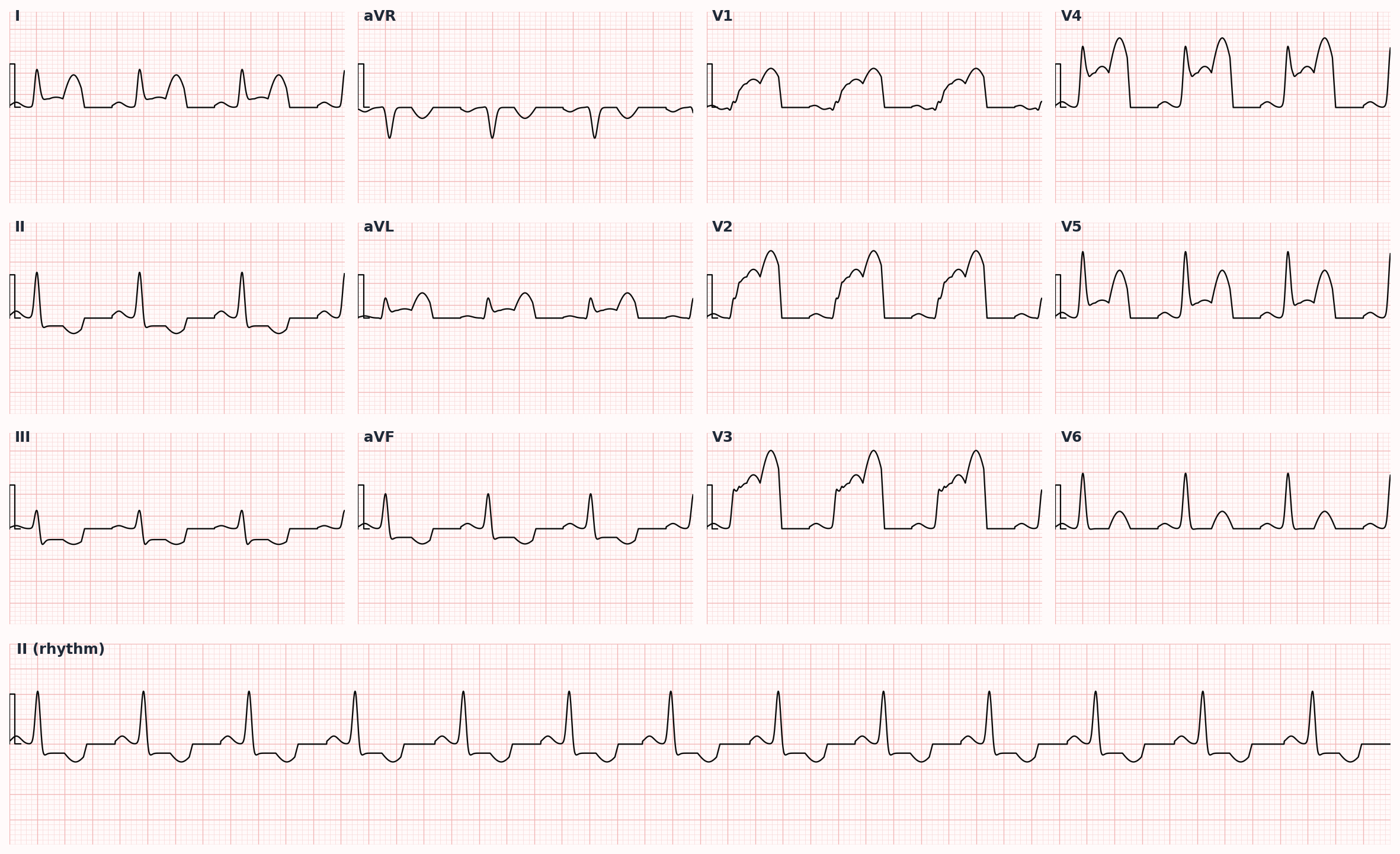
Anterior ST-elevation MI (ST elevation in V1–V4) complicated by cardiogenic shock (hypotension 88/60 mm Hg, tachycardia, confusion, diaphoresis) requires immediate reperfusion
Primary PCI is the preferred reperfusion strategy in STEMI with cardiogenic shock and is favored over fibrinolysis whenever it can be performed promptly, per current ACC/AHA STEMI guidance
Early revascularization improves survival in cardiogenic shock; the door-to-balloon target is under 90 minutes
Why the others are wrong
Fibrinolysis with tissue plasminogen activator — reserved for when timely PCI is unavailable and markedly inferior to PCI in cardiogenic shock (right-diagnosis-wrong-step: correct goal of reperfusion, wrong modality here)
Intravenous beta-blockade with metoprolol — beta-blockers are contraindicated in cardiogenic shock and acute decompensated heart failure and can precipitate arrest in a hypotensive patient (anchoring on routine early-STEMI order sets without registering the shock contraindication)
Intravenous analgesia with morphine sulfate — relieves pain but does not reperfuse the occluded artery and can lower blood pressure further (buzzword-matching the "MONA" mnemonic instead of prioritizing reperfusion)
🔒 Free preview limit reached
Keep reading — start your free trial
You've read your 2 free diagnosis previews. Create your free account to unlock the full Acute Coronary Syndrome (ACS) outline — plus all 514 diagnoses, 6,500+ board-style questions, flashcards, and an AI tutor. Your 7-day free trial includes everything, and there's no credit card required.
Other: chronic kidney disease, autoimmune disease, cocaine/methamphetamine use
Pathophysiology
Atherosclerotic plaque rupture or erosion exposes thrombogenic material to circulating blood, triggering platelet aggregation and thrombus formation. Partial occlusion → UA/NSTEMI. Complete occlusion → STEMI. Resulting downstream ischemia → myocyte necrosis if not reperfused.
Clinical presentation
Symptoms
Substernal chest pressure, tightness, or 'heaviness' (classic), often radiating to left arm, jaw, or back
Dyspnea, diaphoresis, nausea/vomiting
Atypical in women, elderly, diabetics: fatigue, epigastric pain, syncope, dyspnea without pain
Symptoms ≥20 min and not relieved by rest/nitrates suggest infarction
Signs / physical exam
Diaphoresis, anxiety, hypotension or hypertension
S4 gallop (LV stiffness from ischemia)
New MR murmur → papillary muscle dysfunction
Crackles → LV failure
Classic findings
Levine's sign (clenched fist over sternum); cool/clammy skin; bradycardia in inferior MI.
Differential diagnosis
Aortic dissection — Sudden tearing or ripping chest pain radiating to the back, BP or pulse differential between arms, widened mediastinum on CXR — DO NOT anticoagulate before excluding
Takotsubo (stress) cardiomyopathy — Postmenopausal women after major emotional/physical stressor; ECG and troponin mimic STEMI; apical ballooning on ventriculogram or echo
Tension pneumothorax — Acute dyspnea, unilateral absent breath sounds, tracheal deviation, hypotension — clinical diagnosis; do not delay decompression for CXR
Esophageal rupture (Boerhaave) — Severe chest/upper abdominal pain after forceful emesis, subcutaneous emphysema, pneumomediastinum on imaging
GERD / esophageal spasm — Burning, postprandial, worse supine; may respond to nitrates and confuse the picture; PPI trial
Costochondritis / musculoskeletal — Reproducible with chest wall palpation, no exertional pattern, normal ECG and troponin
Diagnostic workup
Diagnostic criteria
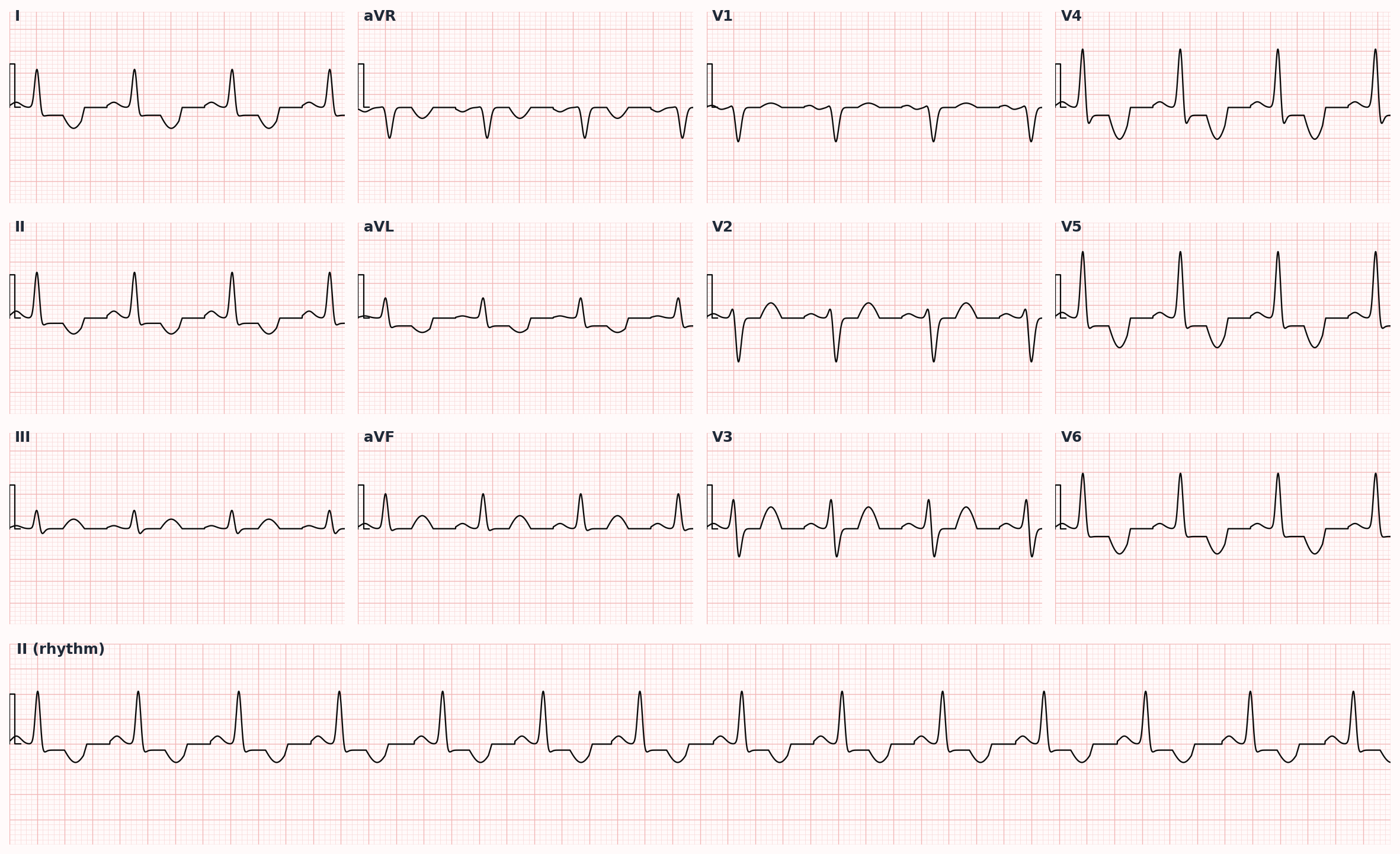
STEMI: ≥1 mm ST elevation in 2 contiguous limb leads OR ≥2 mm in 2 contiguous precordial leads (V2-V3 thresholds vary by age/sex), or new LBBB with clinical correlation. NSTEMI: positive troponin + ischemic symptoms ± ST depression / T-wave inversion. UA: ischemic symptoms with negative troponin.
Labs
Troponin I or T (high-sensitivity) at presentation and 1-3 hours later — single most important biomarker
CBC, BMP, Mg, lipid panel, A1c
Coagulation studies prior to antiplatelet/anticoagulant therapy
Imaging
12-lead ECG within 10 minutes of arrival — repeat every 15-30 min if initial nondiagnostic
Portable CXR (look for pulmonary edema, widened mediastinum to exclude aortic dissection)
Bedside echo if hemodynamic instability or mechanical complication suspected
Diagnostic algorithm
flowchart TD
  A[Chest pain<br/>≥10 min, suggestive] --> B[12-lead ECG<br/>within 10 min]
  B --> C{ST elevation?}
  C -->|Yes| D[STEMI]
  D --> E[Primary PCI<br/>≤90 min]
  D --> F[Fibrinolysis<br/>if PCI delay]
  C -->|No| G[Troponin<br/>0 and 1-3 h]
  G --> H{Troponin<br/>elevated?}
  H -->|Yes| I[NSTEMI]
  I --> J[Risk stratify<br/>TIMI / GRACE]
  J --> K[Early invasive<br/>≤24 h if high risk]
  H -->|No| L{Ongoing<br/>ischemic Sx?}
  L -->|Yes| M[Unstable Angina]
  M --> N[Medical optimization<br/>+ stress test]
  L -->|No| O[Non-cardiac<br/>workup]
ACS triage algorithm — decision tree from initial chest pain to definitive treatment pathway.
Treatment
First-line
Aspirin 325 mg chewed immediately
P2Y12 inhibitor loading dose: ticagrelor 180 mg, clopidogrel 600 mg, or prasugrel 60 mg (prasugrel only if known anatomy proceeding to PCI; avoid if age >75, weight <60 kg, or prior stroke/TIA)
Anticoagulation: unfractionated heparin (preferred for PCI), enoxaparin, bivalirudin, or fondaparinux (NSTEMI medical management)
High-intensity statin on admission regardless of baseline LDL — atorvastatin 40-80 mg or rosuvastatin 20-40 mg
Beta-blocker within 24 h (oral): metoprolol tartrate or succinate, carvedilol, or bisoprolol — avoid in acute decompensated HF, bradycardia, hypotension
Sublingual nitroglycerin for ongoing pain (avoid in inferior/RV infarct, hypotension, recent PDE5 inhibitor use)
Supplemental O2 only if SpO2 <90% (routine O2 worsens outcomes in normoxic patients)
STEMI
Primary PCI within 90 min of first medical contact (preferred)
Fibrinolysis (alteplase, tenecteplase) if PCI unavailable within 120 min and symptom onset <12 h
Door-to-needle goal ≤30 min for fibrinolysis
NSTEMI / High-risk UA
Risk-stratify with TIMI or GRACE score
Early invasive (cath <24 h) for GRACE >140, refractory ischemia, hemodynamic/electrical instability, new HF
Delayed invasive (cath 24-72 h) for intermediate risk
Low-risk UA
Conservative strategy: medical optimization + stress testing prior to discharge
Cath if stress test positive or symptoms recur
Second-line / adjunct
ACEi/ARB within 24 h if LV dysfunction, anterior MI, HTN, diabetes, or CKD
Aldosterone antagonist (spironolactone, eplerenone) if EF ≤40% + symptoms or diabetes
Cardiac rehab referral at discharge
Complications
Arrhythmias: ventricular fibrillation (early, most common cause of death pre-hospital), AV blocks (especially inferior MI), atrial fibrillation
Posterior MI = ST depression in V1-V3 with prominent R wave (mirror image). Obtain posterior leads V7-V9.
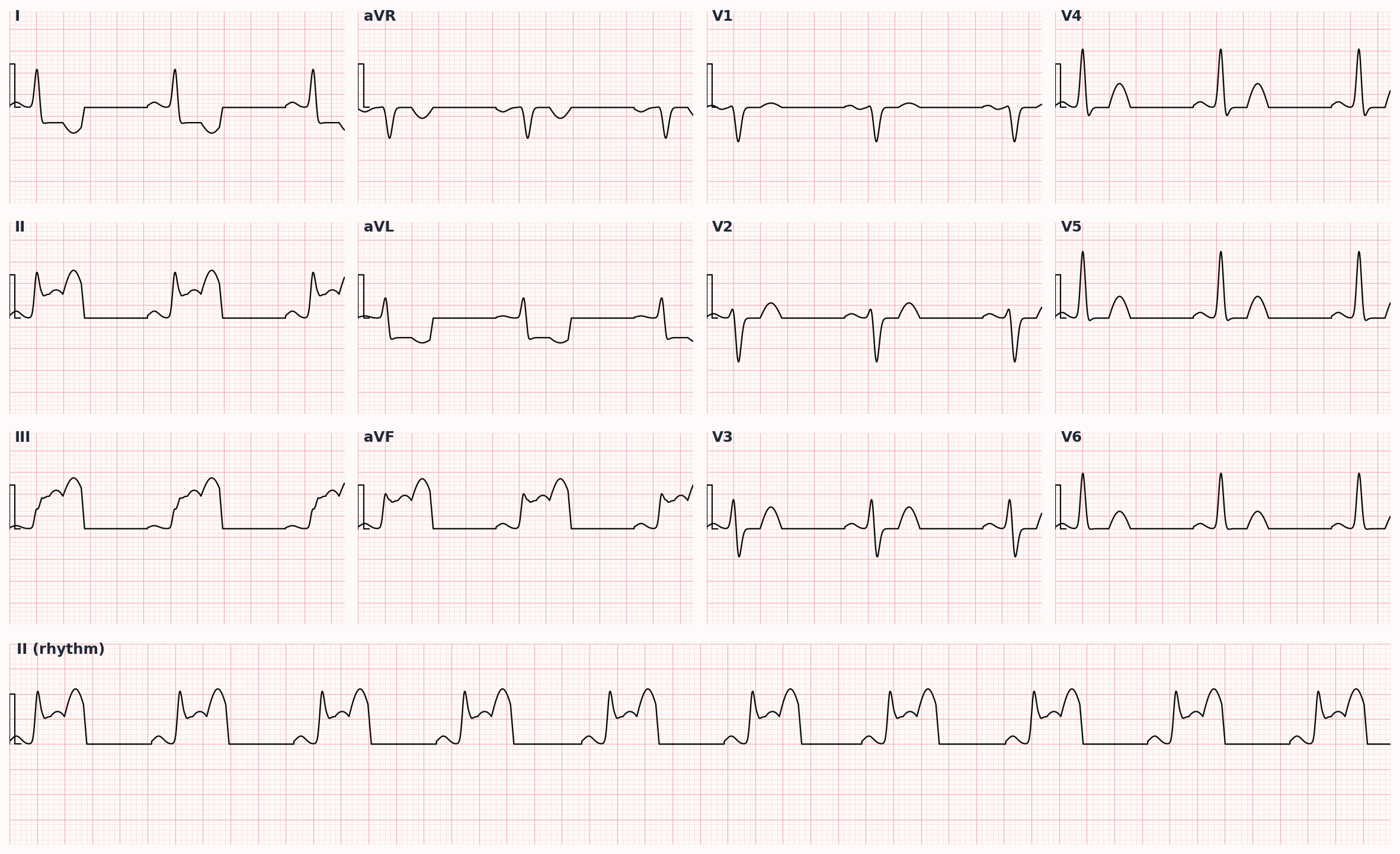
Inferior MI (II, III, aVF) with RV involvement (V4R) — preload-dependent. NITRATES AND DIURETICS ARE CONTRAINDICATED. Give IV fluids.
Wellens syndrome: biphasic or deep symmetric T-wave inversions in V2-V3 = critical proximal LAD stenosis. Often pain-free at presentation. Stress testing contraindicated; cath directly.
New LBBB with chest pain is treated as STEMI equivalent if Sgarbossa criteria positive.
Anterior STEMI — ST-segment elevation in V1-V4 with reciprocal changes inferiorlyInferior STEMI — ST elevation in II, III, aVF; reciprocal depression in I and aVLNSTEMI — ST-segment depression and T-wave inversion without ST elevation
References
ACC/AHA/SCAI 2021 — 2021 ACC/AHA/SCAI Guideline for Coronary Artery Revascularization (Lawton et al., Circulation 2022)
AHA/ACC 2014 — AHA/ACC Guideline for the Management of Patients with Non-ST-Elevation Acute Coronary Syndromes (Amsterdam et al., JACC 2014)
ACCF/AHA 2013 — ACCF/AHA Guideline for the Management of ST-Elevation Myocardial Infarction (O'Gara et al., JACC 2013)
Universal Definition — Fourth Universal Definition of Myocardial Infarction (Thygesen et al., JACC 2018)
Practice Cardiovascular questions on FirstPassPA
Turn this outline into retention. 6,500+ board-style questions with an AI tutor that explains every answer — free to start, no card required.
Educational use only. This outline is a study aid for PA students and is not medical advice or a substitute for clinical judgment. FirstPassPA is an independent study tool and is not affiliated with, endorsed by, or sponsored by NCCPA or PAEA. PANCE® and PANRE® are registered trademarks of the National Commission on Certification of Physician Assistants; End of Rotation™ is a program of the Physician Assistant Education Association.