Common ectopic beats — usually benign in structurally normal hearts; high burden may herald cardiomyopathy and warrant evaluation.
Also known as: PAC, premature atrial contraction, premature atrial complex, PVC, premature ventricular contraction, ectopic beats
Overview
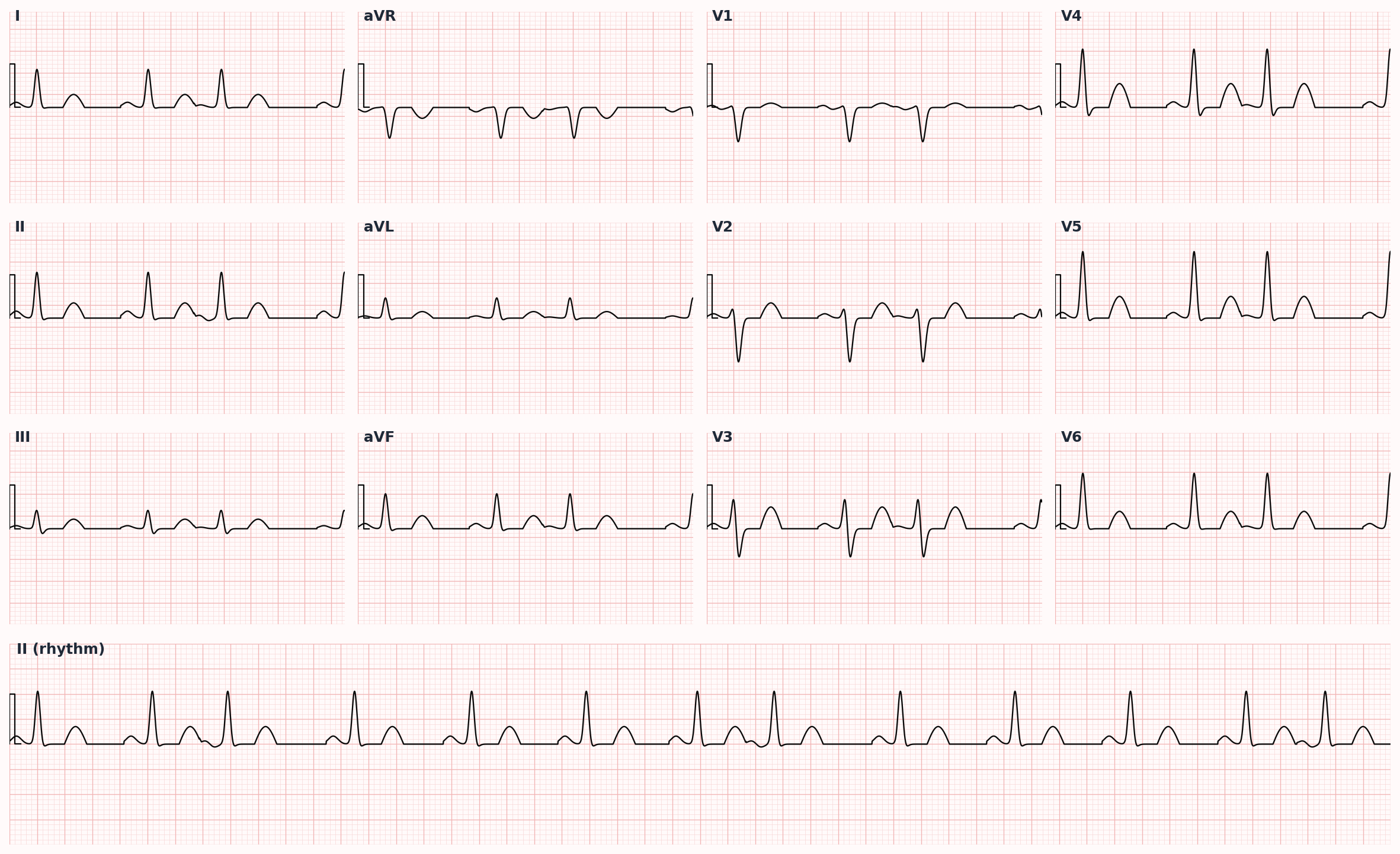
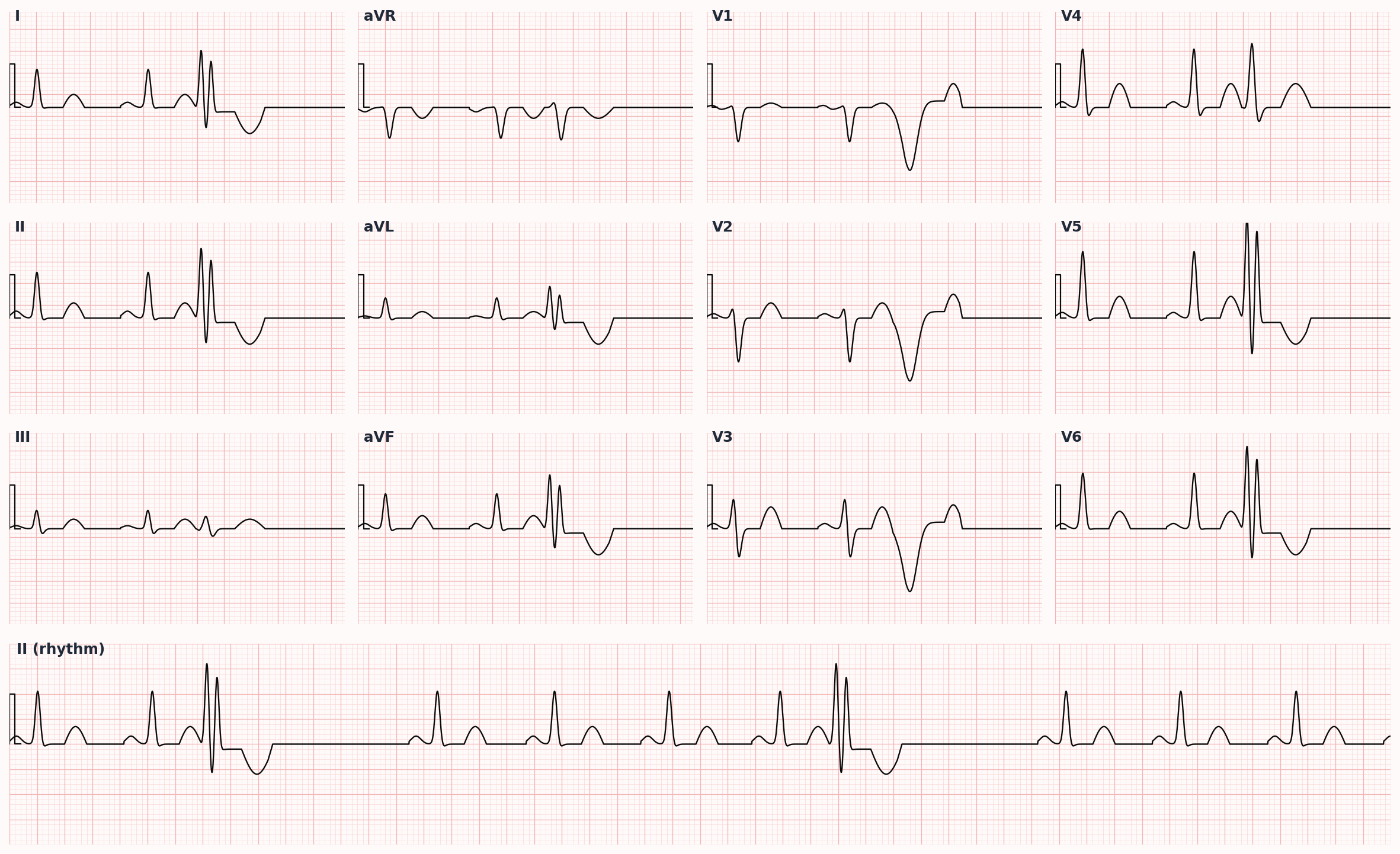
Premature atrial contractions (PACs) are early beats originating from ectopic foci within the atria, producing an early P wave (often with altered morphology) followed by a narrow QRS. Premature ventricular contractions (PVCs) originate below the AV node, generating a wide QRS (>120 ms) without a preceding P wave, often followed by a fully or partially compensatory pause. Both are common and often benign in structurally normal hearts.
Epidemiology
PACs and PVCs are extraordinarily common; >50% of healthy adults will have at least one PVC on ambulatory monitoring. Frequency rises with age and underlying cardiovascular disease. A PVC burden >10-15% of total beats on 24-hour Holter is associated with risk of PVC-induced cardiomyopathy.
Try two board-style Premature Atrial and Ventricular Contractions questions
Real questions from the FirstPassPA bank, with the full explanation. Pick an answer — no signup, no email.
Question 1CardiovascularEasy
A 55-year-old man with no known cardiac disease has frequent palpitations. Holter monitor shows isolated wide QRS complexes that occur earlier than expected, are not preceded by a P wave, and have a fully compensatory pause. There are fewer than 5 such beats per hour. Which arrhythmia is most consistent with these findings?
ANonsustained ventricular tachycardia
BPremature atrial contractions
CJunctional escape beats
DPremature ventricular contractions
Reveal answer & full explanation
Correct answer: D — Premature ventricular contractions
ANonsustained ventricular tachycardia
BPremature atrial contractions
CJunctional escape beats
DPremature ventricular contractions✓
Why premature ventricular contractions is correct
Premature ventricular contractions (PVCs) are early, wide-QRS beats not preceded by a P wave, typically followed by a fully compensatory pause because the sinus node is not reset.
Isolated, infrequent PVCs in a structurally normal heart are usually benign and require no specific therapy beyond reassurance and avoidance of triggers (caffeine, stimulants).
Why the others are wrong
B) Premature atrial contractions — Premature atrial contractions are narrow-QRS and preceded by an early abnormal P wave.
A) Nonsustained ventricular tachycardia — Nonsustained ventricular tachycardia (VT) requires three or more consecutive ventricular beats.
C) Junctional escape beats — Junctional escape beats are late (escape), not premature.
Question 2CardiovascularMedium
A 42-year-old woman presents with several months of intermittent palpitations she describes as a "skipped beat" followed by a forceful thump, occurring throughout the day without clear triggers. She has no chest pain, dyspnea, or syncope, and no family history of sudden death. Vital signs and cardiac exam are normal. A 12-lead ECG shows frequent premature ventricular contractions with a left bundle branch block morphology and inferior axis. A basic metabolic panel, TSH, and CBC are normal, and a transthoracic echocardiogram shows normal chamber size and a left ventricular ejection fraction of 60%. Which of the following is the most appropriate next diagnostic test?
AInvasive electrophysiology study
B24-hour ambulatory Holter monitor
CContrast-enhanced cardiac MRI scan
DExercise treadmill stress testing
Reveal answer & full explanation
Correct answer: B — 24-hour ambulatory Holter monitor
AInvasive electrophysiology study
B24-hour ambulatory Holter monitor✓
CContrast-enhanced cardiac MRI scan
DExercise treadmill stress testing
Why 24-hour ambulatory Holter monitor is correct
After a structurally normal heart is established by exam, labs, and echocardiography, quantifying PVC burden is the key next step in risk stratification for symptomatic PVCs.
PVC burden is expressed as the percentage of total beats; a burden greater than 10-15% on 24-hour monitoring identifies patients at risk for PVC-induced cardiomyopathy and flags the need for closer follow-up or consideration of suppression/ablation.
The RVOT (left bundle branch block morphology, inferior axis) origin described here is the most common idiopathic PVC source in a normal heart, and burden — not morphology alone — drives management.
Why the others are wrong
Exercise treadmill stress testing is useful when symptoms are exertional or to assess whether PVCs suppress or worsen with exercise (or when ischemia or CPVT is suspected); this patient's PVCs occur at rest without exertional triggers, so it is not the best next step.
Contrast-enhanced cardiac MRI is reserved for unusual morphology or suspicion of a structural substrate (ARVC, sarcoidosis, unexplained cardiomyopathy) when echo is inadequate; with a normal echo and a typical RVOT pattern, MRI is premature.
Invasive electrophysiology study is used selectively when catheter ablation is being planned, not as a screening or quantification tool; it is out of sequence before burden is even established.
🔒 Free preview limit reached
Keep reading — start your free trial
You've read your 2 free diagnosis previews. Create your free account to unlock the full Premature Atrial and Ventricular Contractions outline — plus all 514 diagnoses, 6,500+ board-style questions, flashcards, and an AI tutor. Your 7-day free trial includes everything, and there's no credit card required.
PACs arise from enhanced automaticity, triggered activity, or microreentry within atrial myocardium or pulmonary vein sleeves — the latter are a key substrate for atrial fibrillation. PVCs arise from similar mechanisms within ventricular tissue, most commonly the outflow tracts (especially the right ventricular outflow tract, producing a characteristic LBBB pattern with inferior axis) or fascicular Purkinje system. Frequent PVCs (>10-15% burden) can produce dyssynchronous ventricular contraction, ventricular remodeling, and a reversible cardiomyopathy.
Clinical presentation
Symptoms
Often asymptomatic and found incidentally
Palpitations described as 'skipped beats,' 'flip-flop,' or 'thump' (the strong post-extrasystolic beat is what patients often perceive)
Lightheadedness, fatigue, or rarely syncope with very high burden
Symptoms of heart failure if PVC-induced cardiomyopathy has developed
Anxiety triggered by perceived irregular heartbeat
Signs / physical exam
Irregular pulse with intermittent skipped or strong beats
Variable intensity of S1 (with PVCs interrupting normal AV synchrony)
Cannon A waves on JVP examination if AV dissociation
Heart murmurs may vary in intensity beat-to-beat
Otherwise normal exam unless underlying structural disease
Classic findings
PAC: early, narrow QRS preceded by an abnormal P wave, often followed by a non-compensatory pause. PVC: early, wide QRS without preceding P wave, often followed by a fully compensatory pause; the next sinus beat returns at the expected time.
Differential diagnosis
Atrial fibrillation / atrial flutter (when frequent PACs in bigeminy) — Irregular rhythm without identifiable P waves vs PAC bigeminy with discrete early P; longer monitoring may clarify
Sinus arrhythmia — Phasic variation in sinus rate with respiration; normal P wave morphology
Ventricular tachycardia (when frequent PVCs/runs) — ≥3 consecutive PVCs at >100 bpm constitutes NSVT; sustained >30 sec is VT
Aberrantly conducted PAC vs PVC — Preceding P wave (often abnormal) suggests PAC with aberrancy; AV dissociation/fusion beats favor PVC
Pacemaker spikes — Distinguished by pacing artifact preceding QRS
Catecholaminergic polymorphic VT (CPVT) — Exercise- or emotion-triggered bidirectional VT in young patients with normal resting ECG; RYR2 mutations
Arrhythmogenic right ventricular cardiomyopathy (ARVC) — LBBB-pattern PVCs with epsilon waves, T-wave inversion V1-V3; RV structural abnormalities on MRI
Diagnostic workup
Labs
BMP including potassium, magnesium
TSH
CBC for anemia
Troponin if ischemia suspected
Imaging
12-lead ECG to characterize morphology and define PVC origin (RVOT, LVOT, fascicular, etc.)
Ambulatory 24-48 hour Holter monitor to quantify burden — key for risk stratification and need for further workup; PVC burden >10-15% suggests need for further evaluation
Echocardiography in symptomatic patients, those with frequent PVCs (>5-10%), or any suspicion of structural heart disease
Stress testing if symptoms are exertional or to assess suppression vs provocation with exercise
Cardiac MRI for unusual morphology, suspected ARVC, sarcoid, or unexplained cardiomyopathy
Electrophysiology study selectively in patients considered for catheter ablation
Diagnostic algorithm
Feature
PAC
PVC
P wave before QRS
Yes (early, often abnormal morphology)
No
QRS width
Narrow (<120 ms) unless aberrancy
Wide (≥120 ms)
Post-extrasystolic pause
Non-compensatory (resets sinus node)
Fully compensatory (sinus node not reset)
Common origin
Atrial myocardium, pulmonary veins
RVOT, fascicular system, LVOT, scar
Risk if high burden
Initiation of AFib
PVC-induced cardiomyopathy
First-line therapy if symptomatic
Beta-blocker, trigger modification
Beta-blocker, trigger modification
Definitive therapy (refractory)
Pulmonary vein ablation (if triggering AFib)
Catheter ablation (especially RVOT)
Comparison of premature atrial and ventricular contractions.
Treatment
First-line
Asymptomatic PACs/PVCs with structurally normal heart and low burden: reassurance and observation — these are typically benign
Beta-blockers (metoprolol, propranolol, atenolol) — first-line pharmacologic therapy for symptomatic PACs or PVCs; nondihydropyridine CCBs (diltiazem, verapamil) are alternatives, particularly for idiopathic RVOT or fascicular PVCs
Second-line / adjunct
Class IC antiarrhythmics (flecainide, propafenone) for symptomatic PVCs in structurally normal hearts (avoid in CAD, LV dysfunction)
Amiodarone for symptomatic PVCs in patients with structural heart disease or HF, though chronic toxicity profile limits enthusiasm
Catheter ablation for: symptomatic PVCs refractory to medical therapy, PVC-induced cardiomyopathy (high burden + reduced EF), or specific high-yield morphologies (RVOT PVCs have ~90% ablation success)
Treat underlying structural heart disease, ischemia, or HF aggressively
ICD is NOT indicated for PVCs alone in the absence of high-risk markers (sustained VT, low EF meeting primary prevention criteria, etc.)
Complications
PVC-induced cardiomyopathy (typically with >10-15% burden, often reversible with PVC suppression or ablation)
Triggering of sustained ventricular tachyarrhythmias in patients with structural heart disease
Initiation of atrial fibrillation by frequent PACs (especially those originating in pulmonary veins)
Anxiety, depression, reduced quality of life from symptom burden
Inappropriate or unnecessary cardiac testing
PANCE pearls
PVC-induced cardiomyopathy: typically requires burden >10-15% of total beats on 24-hour monitoring. EF often improves substantially after suppression with medication or ablation — the cardiomyopathy is reversible.
Right ventricular outflow tract (RVOT) PVCs (LBBB morphology, inferior axis, transition V3-V4) are the most common idiopathic PVCs in structurally normal hearts and respond well to catheter ablation.
PACs originating in pulmonary veins are the dominant trigger for AFib initiation — frequent PACs can be a harbinger.
Compensatory pause: PVCs typically have a FULLY compensatory pause (the next sinus beat returns at expected time because the PVC does not reset the sinus node); PACs typically have an INCOMPLETE compensatory pause (resetting the sinus node).
Cardiac MRI is useful when PVC morphology suggests ARVC, sarcoidosis, or other structural substrate not seen on echo.
Images
Premature atrial contraction — early P wave with abnormal morphology, narrow QRSPremature ventricular contraction — wide, bizarre QRS without preceding P wave, often followed by compensatory pause
References
AHA/ACC/HRS 2017 — 2017 AHA/ACC/HRS Guideline for Management of Patients With Ventricular Arrhythmias and the Prevention of Sudden Cardiac Death (Al-Khatib et al., JACC 2018)
EHRA/HRS/APHRS 2019 — EHRA/HRS/APHRS/LAHRS Expert Consensus Statement on Catheter Ablation of Ventricular Arrhythmias (Cronin et al., Heart Rhythm 2020)
AHA Statement 2020 — Premature Ventricular Contractions and Their Role in the Development of Cardiomyopathy: AHA Scientific Statement (Marcus, Circulation 2020)
Practice Cardiovascular questions on FirstPassPA
Turn this outline into retention. 6,500+ board-style questions with an AI tutor that explains every answer — free to start, no card required.
Educational use only. This outline is a study aid for PA students and is not medical advice or a substitute for clinical judgment. FirstPassPA is an independent study tool and is not affiliated with, endorsed by, or sponsored by NCCPA or PAEA. PANCE® and PANRE® are registered trademarks of the National Commission on Certification of Physician Assistants; End of Rotation™ is a program of the Physician Assistant Education Association.