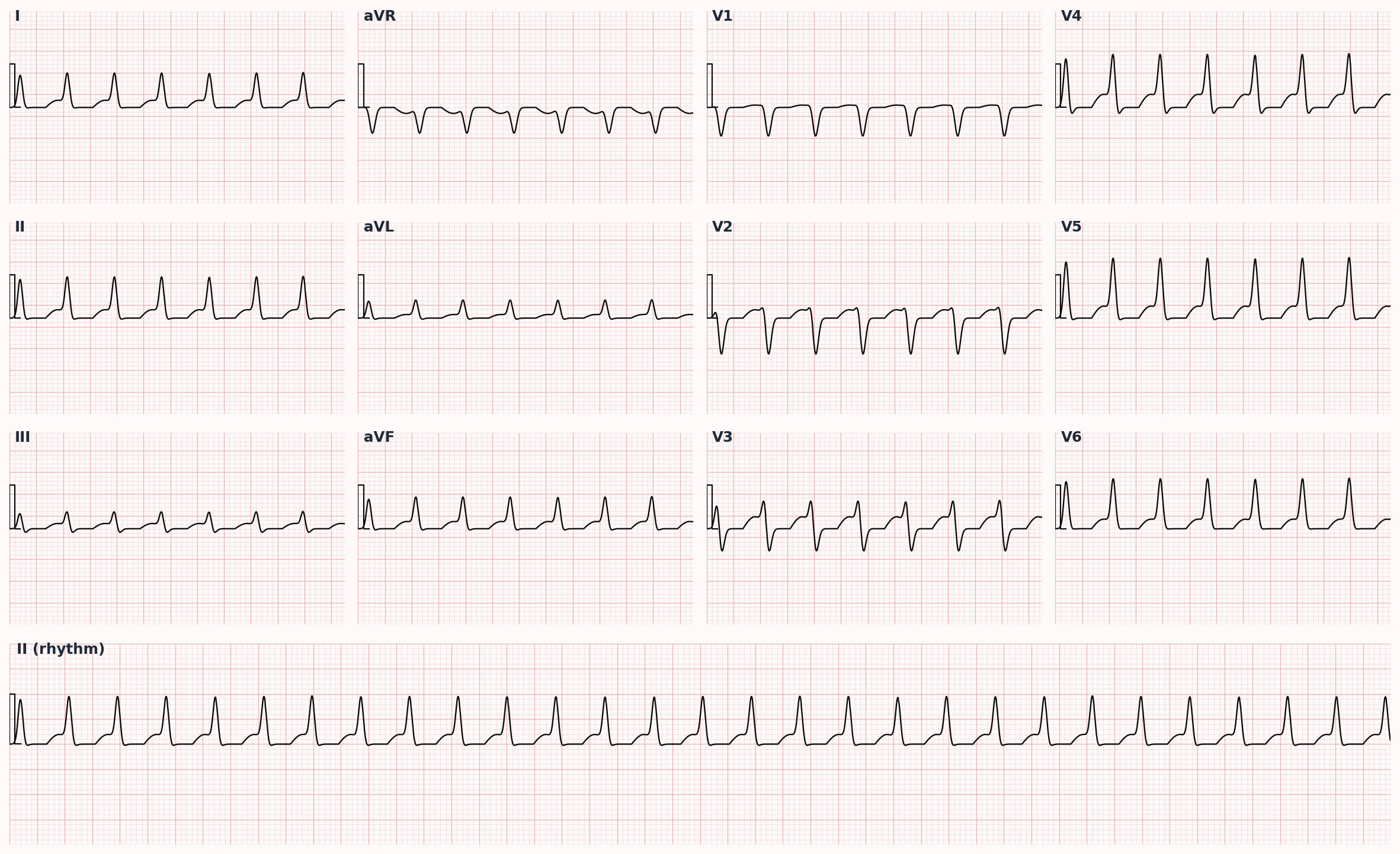
Regular narrow-complex tachycardia from reentry involving AV node ± accessory pathway — vagal maneuvers, adenosine, ablation.
Also known as: SVT, AVNRT, AVRT, PSVT, paroxysmal supraventricular tachycardia, WPW, Wolff-Parkinson-White
Overview
Paroxysmal supraventricular tachycardia (PSVT) is a regular narrow-complex tachycardia originating above the bundle of His. Two main reentrant mechanisms: AV nodal reentrant tachycardia (AVNRT) uses dual AV nodal pathways; AV reentrant tachycardia (AVRT) uses an accessory pathway (e.g., Wolff-Parkinson-White).
Epidemiology
AVNRT is most common SVT in adults (~60%), female predominance, often presents 20s-40s. AVRT (WPW) accounts for ~30%, often presents in younger patients (teens-30s) and is male-predominant.
Try two board-style Supraventricular Tachycardia questions
Real questions from the FirstPassPA bank, with the full explanation. Pick an answer — no signup, no email.
Question 1CardiovascularMedium
A 33-year-old man presents with recurrent episodes of rapid palpitations. He is hemodynamically stable, and a 12-lead ECG shows a short PR interval of less than 120 ms with a slurred upstroke of the QRS complex. He has no structural heart disease on echocardiography. Which of the following is the most serious potential complication of his condition?
ASudden cardiac death
BComplete infranodal AV block
CCardioembolic stroke
DTorsades de pointes
Reveal answer & full explanation
Correct answer: A — Sudden cardiac death
ASudden cardiac death✓
BComplete infranodal AV block
CCardioembolic stroke
DTorsades de pointes
Why sudden cardiac death is correct
The short PR interval and delta wave (slurred QRS upstroke) identify Wolff-Parkinson-White syndrome, in which an accessory pathway (the bundle of Kent) bypasses the AV node and directly connects atrium to ventricle.
If atrial fibrillation develops, the accessory pathway can conduct atrial impulses to the ventricles at extremely rapid rates without the protective decremental delay of the AV node, which can degenerate into ventricular fibrillation.
This is why AV nodal blocking agents (digoxin, verapamil, diltiazem, and adenosine) are avoided in WPW with atrial fibrillation — blocking the node preferentially channels conduction down the accessory pathway and accelerates the ventricular response.
Why the others are wrong
Complete infranodal AV block — This is the wrong mechanism; WPW involves an accessory connection causing rapid conduction, not progressive conduction system failure or bradyarrhythmia.
Cardioembolic stroke — This is associated with the atrial stasis of sustained atrial fibrillation or mechanical valves, not with the accessory-pathway physiology of WPW itself.
Torsades de pointes — Polymorphic ventricular tachycardia driven by QT prolongation from a channelopathy or a culprit drug; the QRS in WPW is pre-excited with a normal QT, and its lethal rhythm is pre-excited atrial fibrillation degenerating into ventricular fibrillation.
Additional high-yield points
Definitive treatment is radiofrequency catheter ablation of the accessory pathway.
Question 2CardiovascularMedium
A 40-year-old woman has recurrent paroxysmal supraventricular tachycardia (SVT) confirmed on Holter monitoring and declines catheter ablation. Which of the following oral medications is preferred for long-term prophylaxis?
AFlecainide
BMetoprolol
CAmiodarone
DDigoxin
Reveal answer & full explanation
Correct answer: B — Metoprolol
AFlecainide
BMetoprolol✓
CAmiodarone
DDigoxin
Why Metoprolol is correct
For long-term supraventricular tachycardia (SVT) prophylaxis in a structurally normal heart, oral beta-blockers (metoprolol) or non-dihydropyridine calcium channel blockers (diltiazem, verapamil) are first-line because they are safe and well-tolerated
Why the others are wrong
Flecainide — flecainide and propafenone can be used in SVT prophylaxis but require a structurally normal heart to be considered; they are not the preferred first-line agents here
Amiodarone — amiodarone is not preferred for SVT prophylaxis due to its significant toxicity profile
Digoxin — digoxin is not a preferred long-term prophylactic agent for SVT
Additional high-yield points
Catheter ablation is curative in >95% of cases and is the preferred definitive treatment option
🔒 Free preview limit reached
Keep reading — start your free trial
You've read your 2 free diagnosis previews. Create your free account to unlock the full Supraventricular Tachycardia (AVNRT / AVRT) outline — plus all 514 diagnoses, 6,500+ board-style questions, flashcards, and an AI tutor. Your 7-day free trial includes everything, and there's no credit card required.
Hyperthyroidism, fever, dehydration, stimulant use as triggers
Pathophysiology
AVNRT: dual AV nodal pathways (slow + fast) create a microreentry circuit confined to the AV node. Typical (slow-fast) form — antegrade slow, retrograde fast — has retrograde P waves buried in or just after the QRS. AVRT: macroreentry involves AV node and an accessory pathway. Orthodromic AVRT (antegrade through AV node, retrograde through accessory) is narrow QRS; antidromic AVRT (antegrade through accessory, retrograde through AV node) is wide QRS.
Clinical presentation
Symptoms
Sudden-onset palpitations with abrupt termination
Lightheadedness, dyspnea, anxiety
Chest pressure, near-syncope or syncope
Polyuria after episode (atrial natriuretic peptide release)
Pre-existing WPW: may present with palpitations or rarely sudden death from pre-excited atrial fibrillation degenerating to VF
Signs / physical exam
Regular rapid pulse 150-220 bpm
Frog sign / cannon A waves in AVNRT (simultaneous atrial and ventricular contraction)
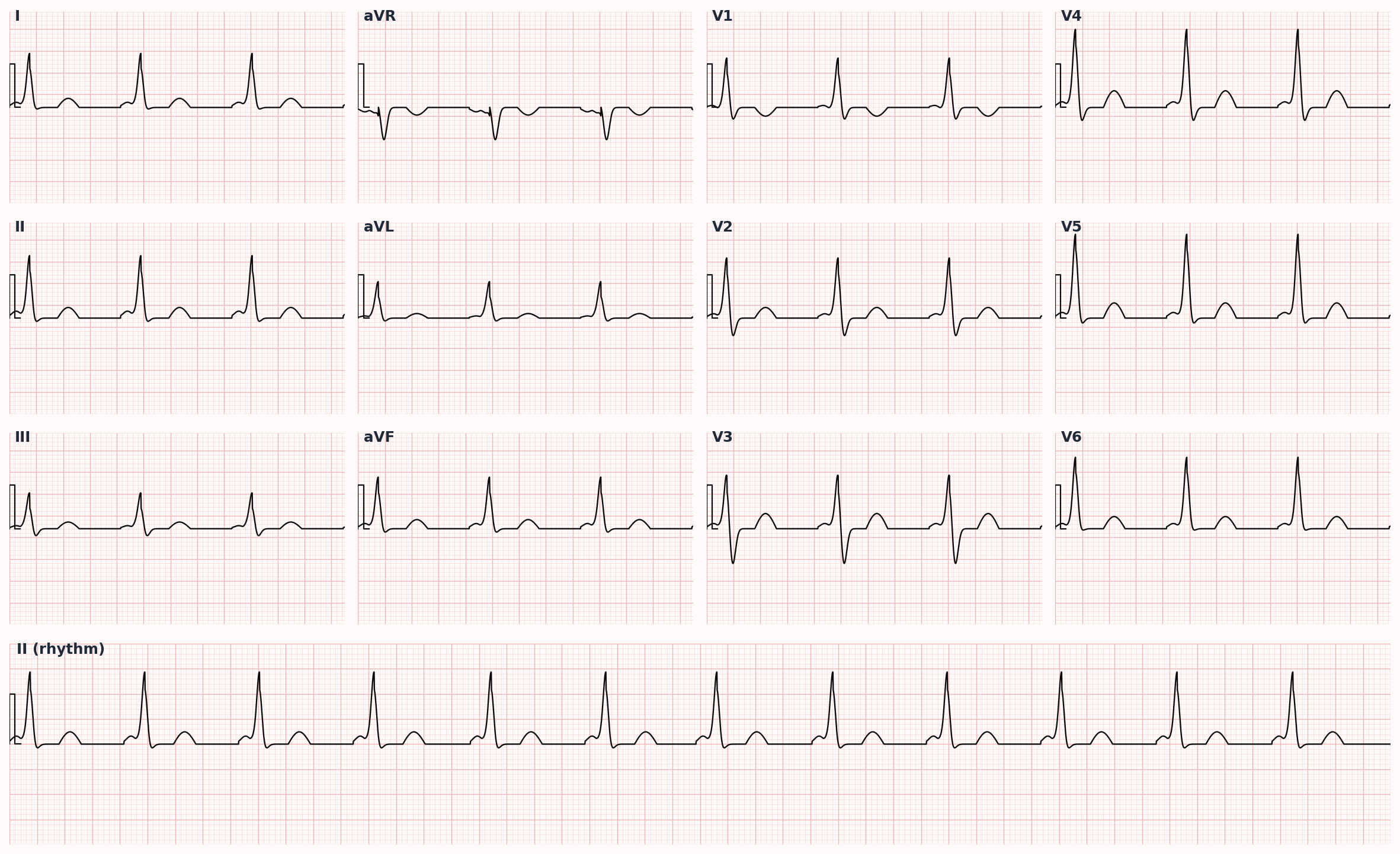
Sinus rhythm: short PR (<120 ms) and delta wave (slurred upstroke of QRS) in manifest WPW
Differential diagnosis
Sinus tachycardia — Rate <160, P waves identical to sinus, gradual onset/offset, identifiable trigger (fever, anemia, hypovolemia)
Atrial fibrillation — Irregularly irregular without discrete P waves
Atrial flutter — Sawtooth flutter waves, ventricular response often 150 from 2:1 conduction; consider flutter in any HR 150
Atrial tachycardia — P-wave morphology different from sinus, may be incessant
Multifocal atrial tachycardia — ≥3 P-wave morphologies in patient with COPD
Junctional tachycardia — Narrow QRS without distinct P waves; rare in adults outside of post-cardiac surgery and digoxin toxicity
VT or SVT with aberrancy — Wide QRS — see VT entry for distinguishing features
Diagnostic workup
Diagnostic criteria
Typical AVNRT: rate 150-250, narrow QRS, retrograde P waves not visible or just after QRS as pseudo-R' in V1 / pseudo-S in inferior leads. Orthodromic AVRT: retrograde P visible after QRS in ST segment. Manifest WPW on resting ECG: PR <120 ms + delta wave + wide QRS + secondary ST-T changes.
Labs
Electrolytes, magnesium, TSH
CBC if anemia suspected as trigger
Troponin if associated chest pain
Imaging
12-lead ECG during tachycardia and in sinus rhythm
Echocardiogram to assess for structural disease, especially before ablation
Holter or event monitor for diagnosis if episodes are infrequent
Electrophysiology study — diagnostic and therapeutic (ablation)
Diagnostic algorithm
flowchart TD
  A[Regular narrow-complex<br/>tachycardia 150-220 bpm] --> B{Hemodynamically<br/>stable?}
  B -->|No| C[Synchronized<br/>cardioversion 50-100 J]
  B -->|Yes| D[Vagal maneuvers<br/>modified Valsalva]
  D --> E{Converted?}
  E -->|No| F[Adenosine 6 mg<br/>then 12 mg × 2]
  E -->|Yes| G[Identify SVT type<br/>on 12-lead]
  F --> H{Converted?}
  H -->|No| I[IV diltiazem or<br/>metoprolol]
  H -->|Yes| G
  G --> J{Recurrent or<br/>symptomatic?}
  J -->|Yes| K[Catheter ablation<br/>>95% cure for AVNRT/AVRT]
  J -->|No| L[Reassurance, vagal<br/>maneuvers PRN]
Acute and long-term management algorithm for narrow-complex SVT.
Treatment
First-line
Stable narrow-complex SVT: vagal maneuvers first — Valsalva (modified REVERT maneuver — supine with leg lift improves success), carotid sinus massage (avoid bilateral or in patients with carotid bruits or recent TIA)
Adenosine 6 mg rapid IV push followed by saline flush; if no conversion in 1-2 min, give 12 mg, then repeat 12 mg — warn the patient about transient chest pressure and asystole
If adenosine fails or is contraindicated: IV diltiazem 0.25 mg/kg over 2 min OR IV metoprolol 5 mg over 2 min × up to 3 doses
Synchronized cardioversion 50-100 J biphasic for hemodynamic instability
For PRE-EXCITED atrial fibrillation (irregularly irregular WIDE complex in WPW): IV procainamide 20-50 mg/min OR ibutilide; AVOID adenosine, AV nodal blockers, and digoxin (can accelerate accessory pathway to VF)
Second-line / adjunct
Long-term: beta-blockers (metoprolol, atenolol), non-dihydropyridine CCBs (diltiazem, verapamil), or flecainide/propafenone (only if no structural disease)
Catheter ablation — first-line option for symptomatic recurrent SVT; >95% success for typical AVNRT (slow pathway modification) and AVRT (accessory pathway ablation)
Patient education on Valsalva for self-termination
Asymptomatic WPW: risk stratification with exercise testing and EP study — ablation if accessory pathway has short antegrade refractory period
Complications
Hemodynamic compromise during sustained tachycardia
Tachycardia-mediated cardiomyopathy with persistent or frequent arrhythmia
WPW: pre-excited atrial fibrillation degenerating to ventricular fibrillation (rare but dreaded)
Adenosine has a half-life of ~10 seconds — must push fast and flush; warn patient about chest pressure and impending doom feeling.
AVOID adenosine and all AV nodal blockers in pre-excited atrial fibrillation (WPW + irregular wide complex) — use procainamide or DC cardioversion.
AVNRT pseudo-R' in V1 and pseudo-S in inferior leads compared to sinus rhythm tracing is highly suggestive.
Modified Valsalva (REVERT trial — passive leg raise after strain) converts >40% of SVT vs ~17% with standard Valsalva.
Catheter ablation is curative for AVNRT and AVRT and is offered as first-line for any recurrent or symptomatic case.
Images
Supraventricular tachycardia — narrow-complex regular tachycardia, no visible P waves (retrograde, often buried)Wolff-Parkinson-White syndrome — short PR interval, delta wave (slurred QRS upstroke), wide QRS
References
ACC/AHA/HRS 2015 SVT — 2015 ACC/AHA/HRS Guideline for the Management of Adult Patients With Supraventricular Tachycardia (Page et al., Circulation 2016)
ESC 2019 SVT — 2019 ESC Guidelines for the Management of Patients with Supraventricular Tachycardia (Brugada et al., Eur Heart J 2020)
REVERT Trial — Postural Modification to the Standard Valsalva Manoeuvre for Emergency Treatment of Supraventricular Tachycardias (Appelboam et al., Lancet 2015)
Practice Cardiovascular questions on FirstPassPA
Turn this outline into retention. 6,500+ board-style questions with an AI tutor that explains every answer — free to start, no card required.
Educational use only. This outline is a study aid for PA students and is not medical advice or a substitute for clinical judgment. FirstPassPA is an independent study tool and is not affiliated with, endorsed by, or sponsored by NCCPA or PAEA. PANCE® and PANRE® are registered trademarks of the National Commission on Certification of Physician Assistants; End of Rotation™ is a program of the Physician Assistant Education Association.